

Exercise is not only about losing weight, building muscles, or improving physical fitness. Regular physical activity can also support mental well-being by helping reduce symptoms of anxiety and depression, improving overall well-being, and supporting brain health. The World Health Organization (WHO) reports that physical activity can reduce symptoms of depression and anxiety and improve thinking, learning, and general well-being.
The good news is that exercise does not always mean spending hours in a gym. Walking, cycling, dancing, stretching, playing a sport, doing household activities, or following a home workout can all add movement to your day. WHO recommends that adults aged 18–64 aim for 150–300 minutes of moderate-intensity aerobic activity per week, or 75–150 minutes of vigorous activity, along with muscle-strengthening activities on at least two days each week.
Research also supports the connection between physical activity and mental health. A 2023 systematic review found an association between higher physical activity levels and lower risk of developing depression and anxiety.
So, whether you prefer a morning walk, a 30-minute home workout, or a few minutes of stretching, regular movement can become a useful part of a healthy lifestyle.
How Does Exercise Support Mental Health?
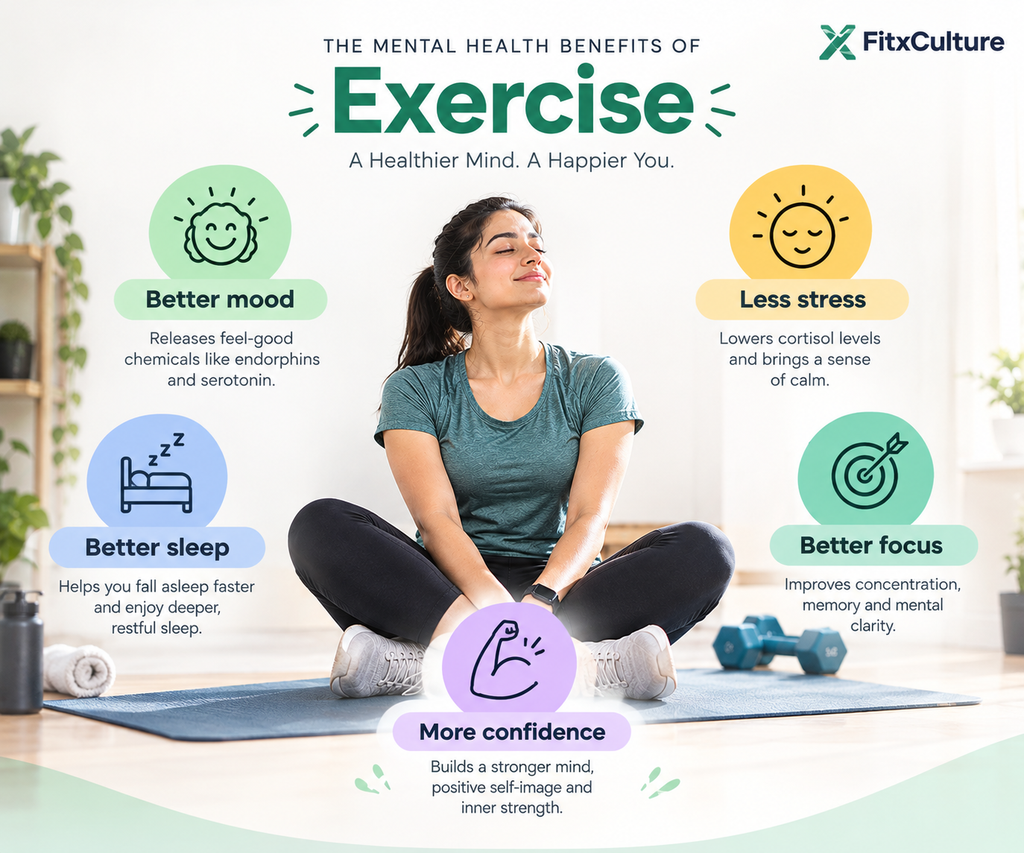
1. It Can Help With Stress
- Physical activity gives you a break from daily responsibilities and screen time.
- A walk or workout can create time to focus on your body and surroundings.
- Regular movement may help reduce symptoms associated with stress and anxiety.
- You don’t need an intense workout; even simple activities can help you become more active.
2. It Can Support Mood
- Exercise is associated with improvements in depressive symptoms.
- A large 2024 systematic review and network meta-analysis included 218 studies and 14,170 participants and examined exercise as an intervention for depression.
- This doesn’t mean exercise is a replacement for professional mental-health treatment.
- Instead, physical activity can be one useful part of a broader approach to mental well-being.
3. It May Support Brain Health
- Physical activity is linked with better brain health and overall well-being.
- Regular movement can also give you an opportunity to step away from long periods of sitting.
- Activities such as walking, cycling, swimming, dancing, and sports can make movement enjoyable rather than feeling like a task.
4. It Can Build a Healthy Routine
Sometimes the hardest part is simply getting started.
- Choose a realistic time for exercise.
- Start with short sessions if you’re currently inactive.
- Pick activities you actually enjoy.
- Keep your routine simple.
- Increase your activity gradually.
WHO emphasizes that some physical activity is better than none, which can make starting less intimidating.
5. It Can Connect Fitness With Everyday Life
Exercise doesn’t have to happen only during a formal workout.
- Walk instead of taking a short vehicle journey when practical.
- Take the stairs when comfortable.
- Go for an evening walk.
- Play an outdoor game.
- Dance to your favourite music.
- Do a short home workout.
- Take movement breaks during long periods of sitting.
WHO considers physical activity to include movement during transportation, work, leisure, sports, and everyday tasks.
How Much Exercise Do You Need?
For adults aged 18–64, WHO recommends:
- 150–300 minutes of moderate aerobic activity each week, or
- 75–150 minutes of vigorous aerobic activity each week, or an equivalent combination.
- Muscle-strengthening activities on 2 or more days per week.
You don’t have to reach this target immediately. If you’re starting from a low activity level, begin with manageable amounts and gradually build your routine.
Frequently Asked Questions
Can exercise improve mental health?
Yes. Regular physical activity is associated with reduced symptoms of depression and anxiety and improved overall well-being.
Is a gym necessary for mental-health benefits?
No. Walking, cycling, home workouts, sports, dancing, and other forms of physical activity can all contribute to an active lifestyle.
How long should I exercise?
There isn’t one perfect duration for everyone. Start with an amount you can comfortably maintain and gradually work toward recommended activity levels.
Can exercise replace therapy or medication?
Exercise should not automatically be treated as a replacement for professional mental-health care. For persistent or serious symptoms, speak with a qualified healthcare professional.
What is the easiest exercise to start with?
For many beginners, walking is a simple option because it requires little equipment and can be adjusted to your fitness level.
Conclusion
Exercise is more than a way to change your body. It can also become a simple way to take care of your mind. Walking, stretching, strength training, sports, and home workouts can all help you bring more movement into your daily routine.
You don’t need to start with a difficult workout. Start small, choose something you enjoy, and focus on consistency.
Move your body, take care of your mind, and make fitness a part of everyday life.
This article is for general health information and isn’t a substitute for professional medical or mental-health advice
References
[1] World Health Organization. Physical Activity.
WHO – Physical Activity
[2] World Health Organization. WHO Guidelines on Physical Activity and Sedentary Behaviour.
WHO – Physical Activity Guidelines
[3] Noetel, M., et al. (2024). Effect of exercise for depression: systematic review and network meta-analysis of randomised controlled trials. BMJ.
PubMed – Exercise and Depression Study